Conduce Whitepaper: Digital Trumps Paper in the Cockpit
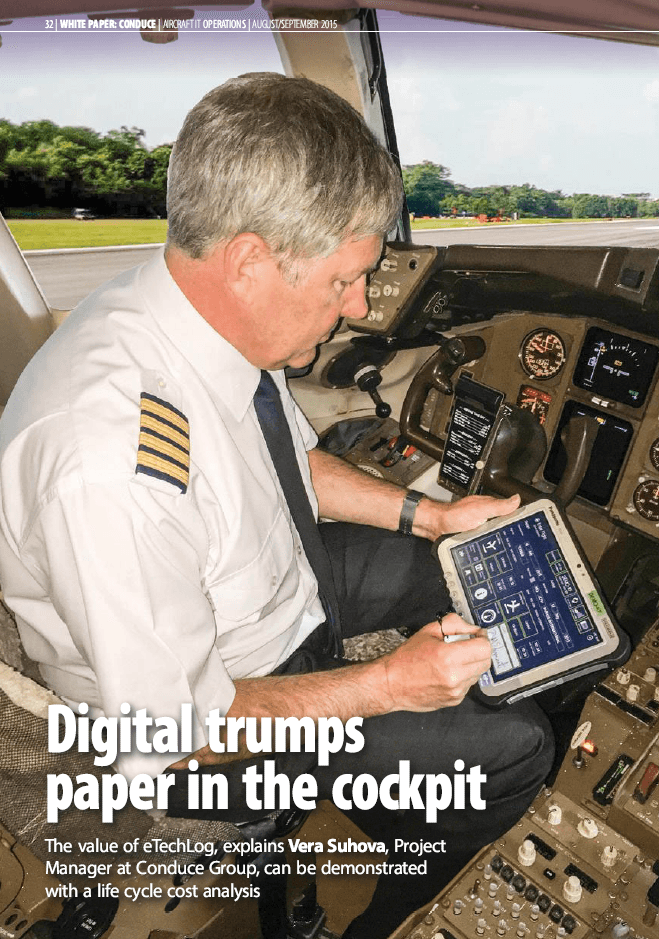
The value of eTechLog8 explains Vera Suhova, Project Manager at Conduce Group, can be demonstrated with a life cycle cost analysis.
For decades, the airline industry has been perusing the holy grail of eliminating the traditional, inefficient, and error prone and often unreadable paper based technical log book by replacing it with an electronic system. Early pioneers launched products in the noughties, enabling a couple of European Airlines to introduce the first EASA certified systems, but to date neither product has been significantly adopted by other airlines. The lack of progress is generally attributed to legacy technology constraints, which made the cost/benefit determination for these systems difficult to justify.
However, moving up to date in 2015, a perfect storm of technologies come together to allow a second generation of electronic technical logbook (ETL) systems to be developed. These new technologies are finally enabling the cost/benefit advantage of the electronic tech Log to be recognised.
These components of this perfect storm comprise:
1. Ability to develop secure, unbreakable, quick-to-use touch screen Apps.
2, Availability of rugged powerful tablet devices
3. Worldwide expansion of speedy low cost data communications.
Systems using these admittedly still maturing technologies are now becoming available as COTS (commercial off the shelf) products which can be relatively inexpensively rolled out within an airline, bringing the huge benefit of eliminating the paper tech log within reasonable timescale and cost parameters.
This article aims to document the cost and benefits of an electronic tech Log system versus legacy paper systems by performing a life cycle cost analysis (LCCA) of a techlog page for a flight sector, comparing handwritten hardcopy costs and subsequent use with electronic data capture. The analysis has been developed into a computer model to enable the costs and benefits to be quantified for airlines of different fleet size and composition (long and short haul). At the end of the article an example airline fleet is applied to the model to illustrate the potential costs ands benefits of an electronic tech log compared to a typical paper based system.
Life Cycle Costing Analysis (LCCA)
Performing a life cycle cost analysis is an accepted scientific approach to examine and understand all aspects of a system. The analysis involves determining the costs associated with each of the system’s life phases from conception through cradle to the grave.
The currently used paper based technical log system consists of various handwritten forms which have specific functions. These manual systems are approved by the relevant National Aviation Authority (NAA).
For an aircraft technical log page (TLP) (assuming one page=one flight sector) the following points have been considered:
Scope of the System
Timeframe: 5 years – the repeated cycle of completing TLP’s for 5 years has been observed. Only direct airline costs/expenses occurring within the airline are considered. The following two scenarios have been studied and compared.
Scenario 1 – Paper: A medium sized airline carrying out both long and short haul regular operations using a conventional paper-based tech log system consists of thee different forms (a paper TLP form along wit cabin defect and deferred defect forms), each of which are manually filled in using multi copy books that are carried by the aircraft.
Scenario 2 – Electronic: The same airline carrying out both long and short-haul regular operations using an electronic technical log. The electronic log also replaces the deferred defect and cabin defect paper logbooks.
Stages of Life of a Technical Log Page
In order to conduct the life cycle costing analysis it is essential to define the life stages of the functional unit that will be then assessed and compared for the scenarios observed. The functional units for this study are the TLP records which are handwritten or typed into the respective paper or electronic technical log system during the specified period of time – 5 years.
The Life-Cycle for a typical TLP have been analysed and the generic life stages of a TLP are described:
Stage 1 – Concept/Design
The technical log with all its workflow and data capture functions is an EASA requirement (Part-M M.A.306) for an aircraft to legally operate. For both the paper and Elctronic systems it is the airlines responsibility to design a TLP that meets the EASA requirements and allows the efficient capture of technical data. Subsequently the data us used for reliability/statistical analysis, so for the purpose of this study the design cost has been ignored for both paper and electronic systems.
Stage 2 – implementation
Once a paper based technical log system is approved an airline must arrange for the printing of the necessary number of books for the fleet and ensure a stock control system is in place to ensure the airline never runs out of the relevant books. There must be at least one book/set of forms of each type on board the aircraft prior to each flight. For an Electronic system the airline must arrange for the purchase and maintenance of the selected electronic devices.
Stage 2 – Service Life/Usage in Flight
Whilst on board, the tech log (paper or electronic) must be stowed in an approved location, and it is available to pilots and engineers to be used as required. During the sector the pilots complete the flight details section of the TLP, with for data such as flight number, route details, OOOI (Out of gate/ take Off/On the ground/In the gate) times, crew members, fuel and oil levels, etc. Pilots may also record the details of any defects that arise during the flight which might include cabin defects passed to them by the cabin crew as well as defects observed from the cockpit.
On completion of the flight, the crew sign to indicate that the entered flight details are correct. Electronic Tech Log systems will then automatically transmit the completed flight details to the airline Operations and Maintrol departments. Paper based TLP systems require this communication to be carried out manually or via some other electronic system. Engineers and other ground staff then generally take ownership of the tech log and perform the usual turnaround activities preparing the aircraft for the next flight.
Stage 4 – Service Life/Usage on Ground
Airlines generally benefit substantially if the aircraft ground turnaround time is kept to an absolute minimum. During the turnaround, airline staff use the tech log to record any defects and associated actions along with any Out Of Phase (OOP) tasks carried out. Staff will also record any servicing (fuel or oil uplifts) that are completed; indeed, every action carried out on the aircraft during the turnaround must be recorded and signed for in some way on the TLP. If any engineering activity is required, then eventually a certified engineer signs a CRS (Certificate of Release to Service) with the authority of their 145 organisations to release the aircraft from a technical perspective for the next flight. If no technical work is completed during the turnaround, then the pilots will complete a pre-flight inspection and authorise the aircraft to be technically ready for the next flight.
In due course, the pilots for the next flight use the paper or electronic tech log to assess the aircraft technical status, reviewing the turnaround activities that have been carried out by the various ground staff and, if satisfied, sign the TLP to accept the airworthiness of the aircraft for the intended flight.
At this stage paper TLP systems require the top copy of the completed TLP to be torn out of the book and left on the ground prior to flight, for physical onward transmission plus, often, sending a fax or email copy to the airline Maintrol/Operations departments.
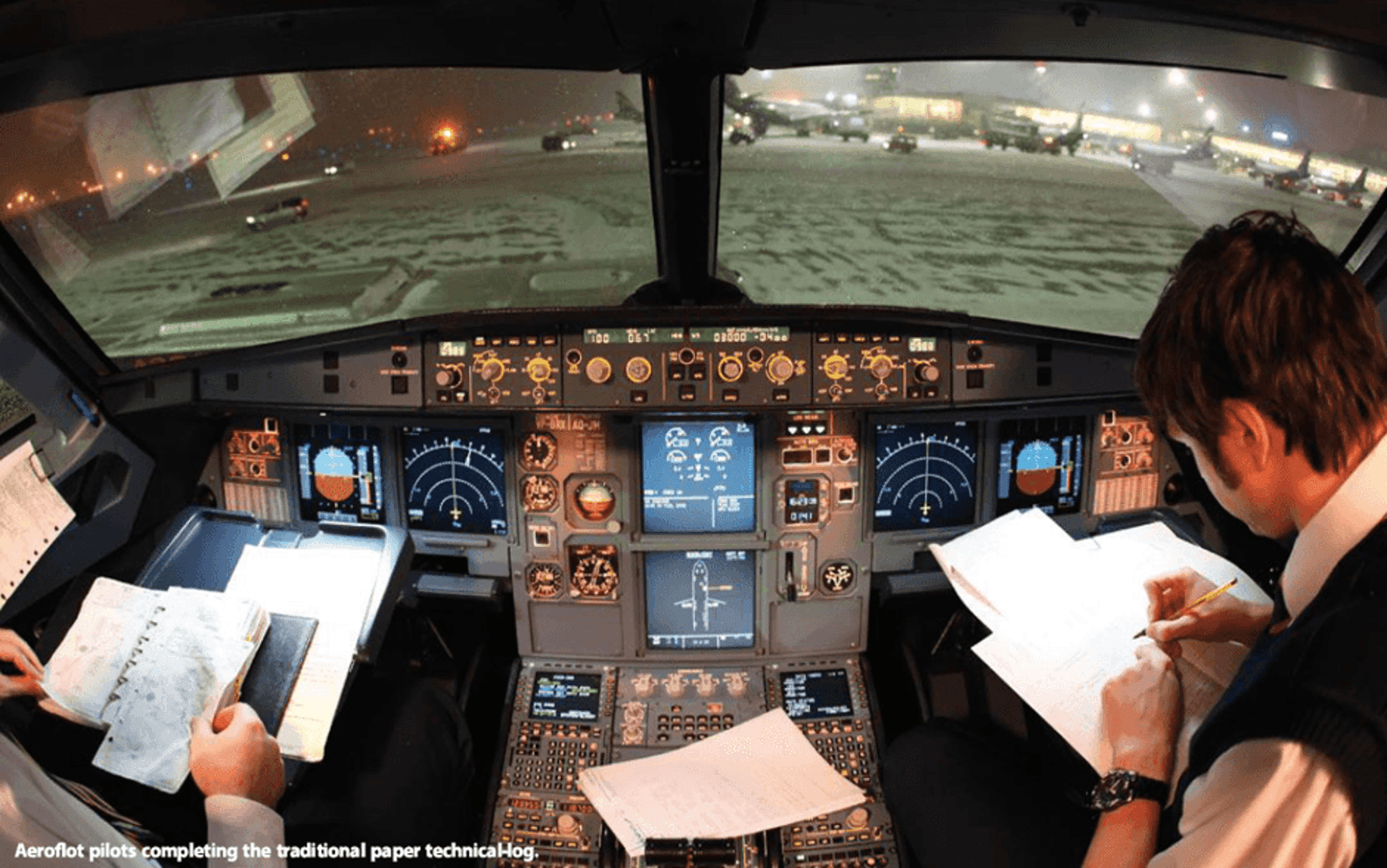
These manually posted faxed/emailed TLP’s are then processed by HQ based Operations and Technical Records staff which records airline systems. This interpretation of the handwritten text (including abbreviations) and accurately record engineers’/pilots’ technical write ups. Any Cabin Defect pages or completed deferred defect pages will also have to be torn out of the respective books and transmitted to HQ for further interpretation and data input to various airline systems as required.
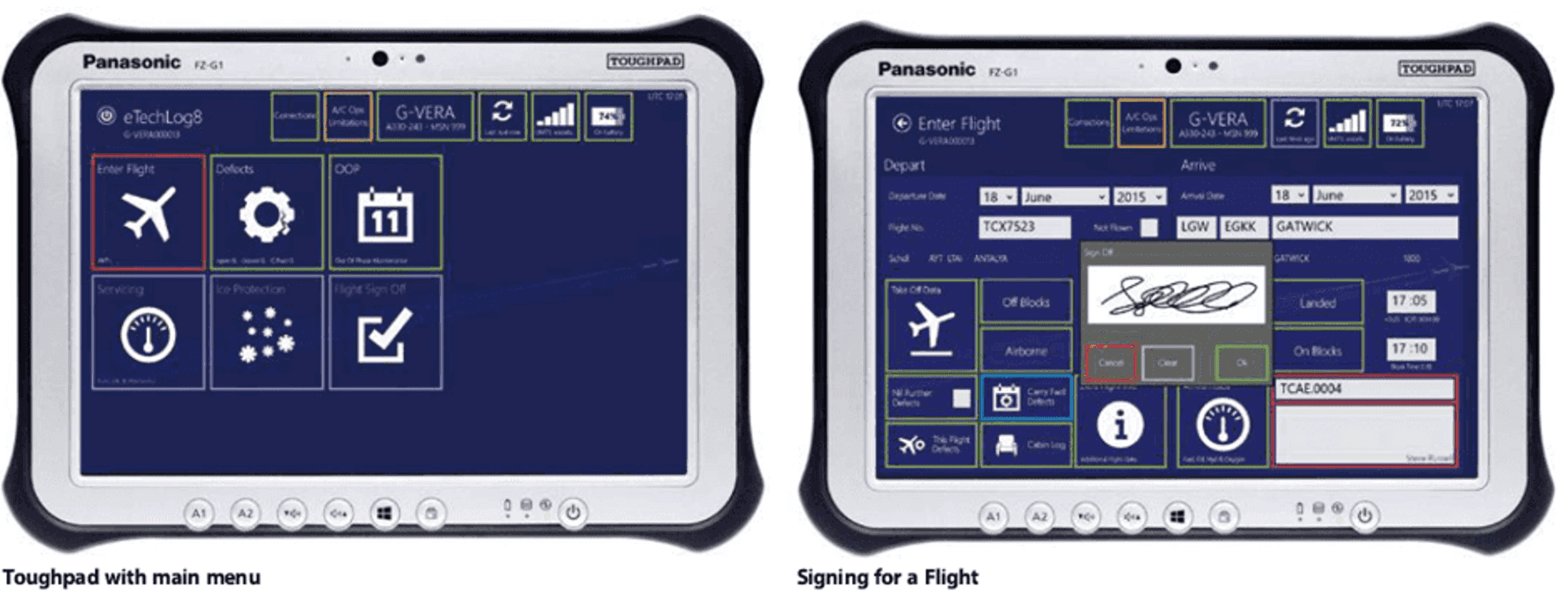
Electronic systems generally automatically transmit the completed TLP data in digital form to the airline, updating the respective MRO/Operations systems in real time electronically.
Stage 5 – Archiving
EASA M.A.306 requires that the paper originals of the TLP are retained for three years . In practice, after the paper TLP is processed it is stored in the company’s archive, usually in a fire-proof/flood-resistant and secure environment. The paper records are also required to be migrated from one operator to another as ownership changes during the aircraft’s lifetime. Digital TLPs are generally kept online in PDF format and indefinitely.
Stage 6 – Discard
After a prescribed period, paper records can be removed from storage and destroyed. Digital records are generally kept indefinitely.
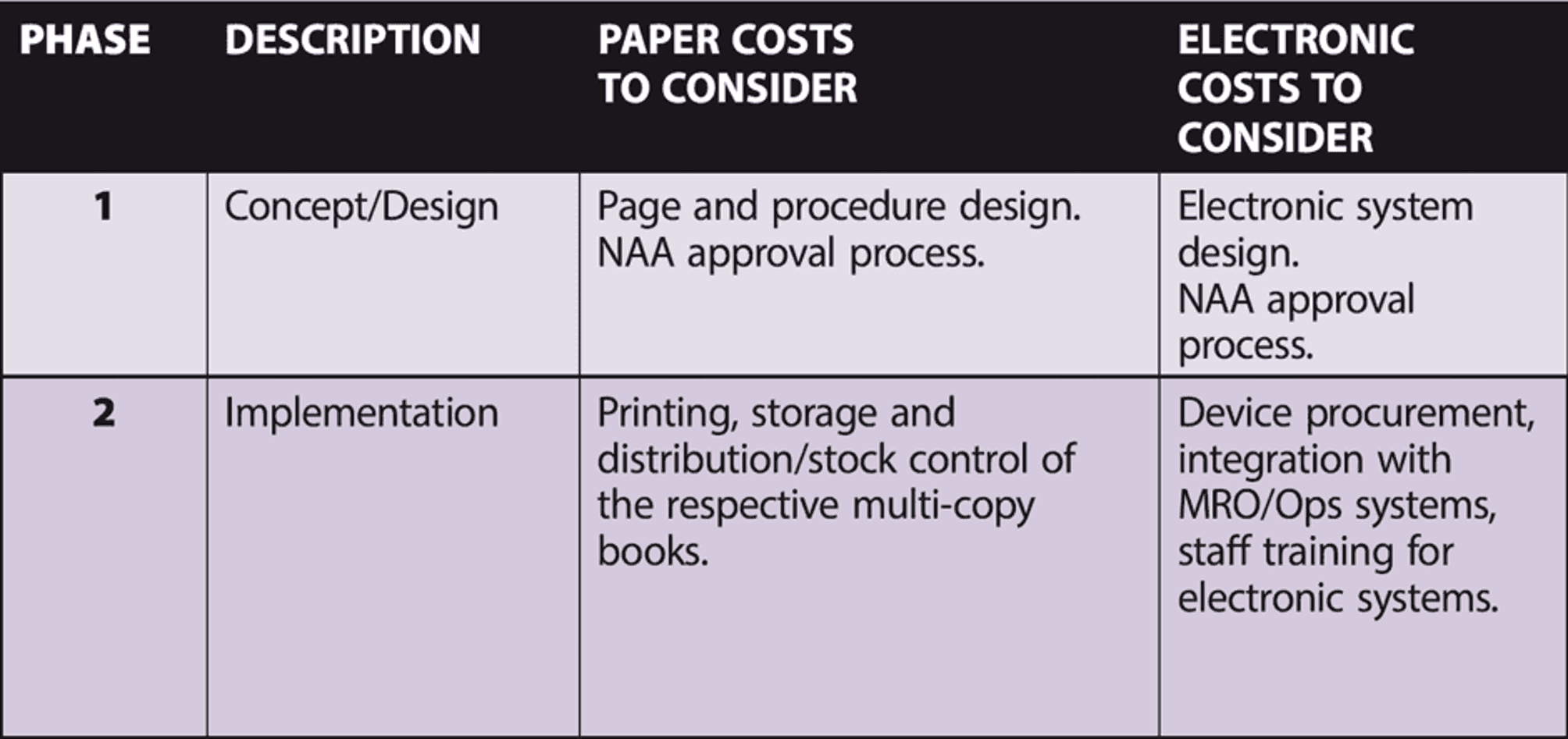
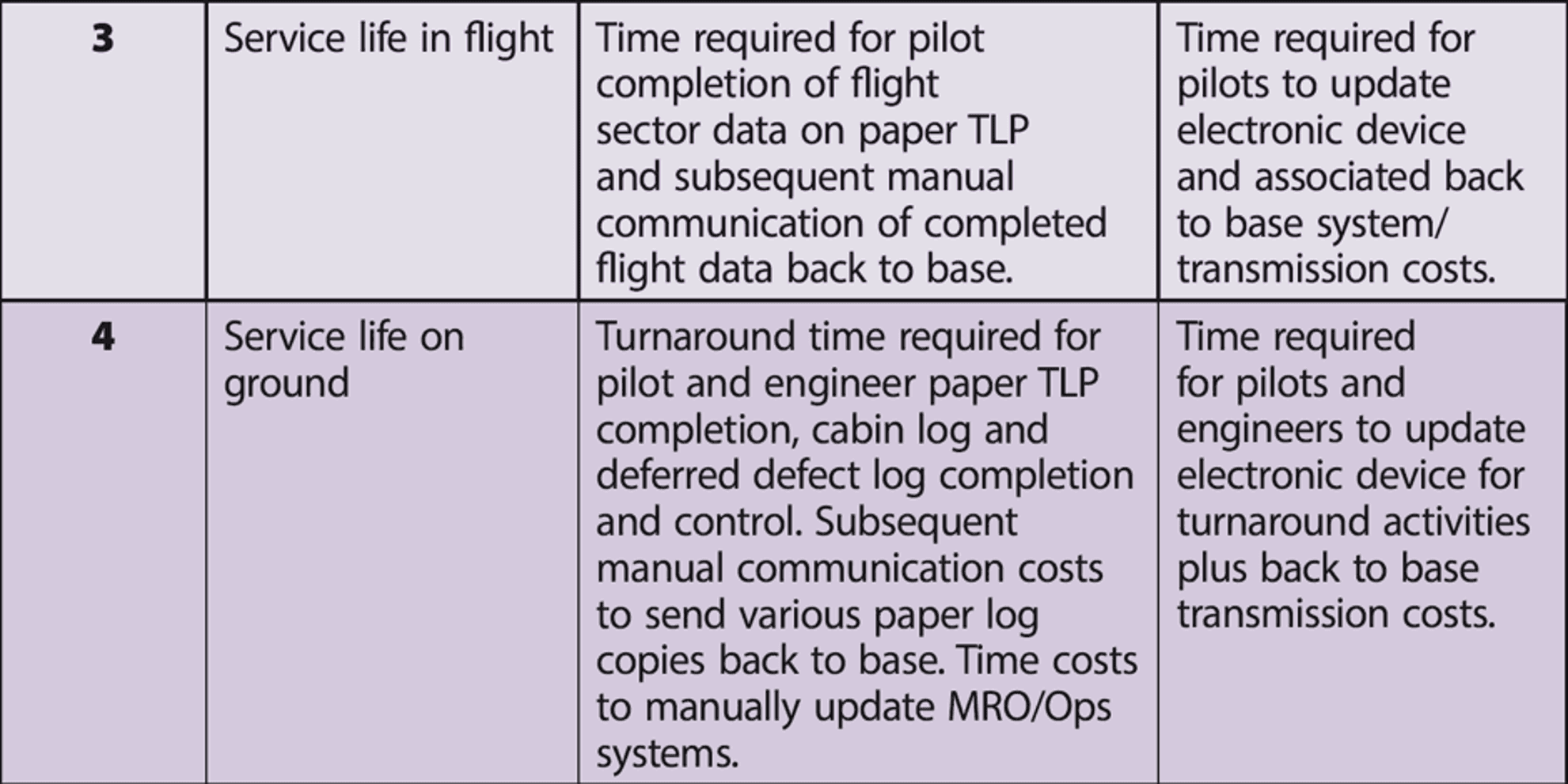
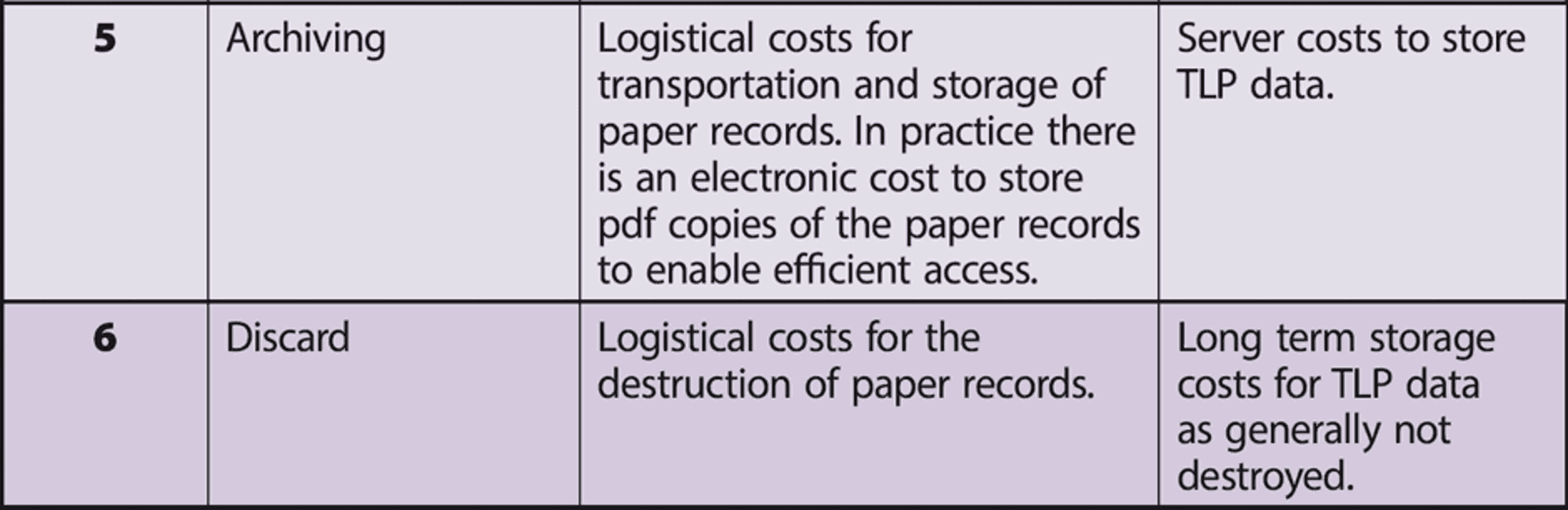
The following table contains a high level comparative overview of the types of costs associated with the paper and electronic scenarios for the previously described life phases:
A Computer Model for the TLP Lifeblood Costs of an Airline
The importance of the airline TLP system should not be underestimated. The aircraft TLPs are essentially the combined blood and nervous system for an airline. The blood (data) enables essentially information to be distributed around the airline and the quick intelligent understanding of that data (from the nervous system~) enables the company to react and make decisions to survive in a fast changing world.
Traditional paper based TLP systems are generally accepted as just too slow for collecting data that needs to be acted on in a love environment. As a consequence airlines have invented all sorts of additional ‘work around’ systems to enable essential flight/technical data to be collected and acted on. Often the paper based TLP’s are regarded as simply archive data that is eventually typed into the backend MRO system, which may not occur until a few days or even weeks after the flights have occurred. Real time operations and line maintenance decisions are made by phone/email or other unofficial computer systems (often Excel or Access based). This is necessary simply to enable the airline to plan day to day activities and function.
Airline Operations and Engineering staff have been known to occasionally ponder the merits if an electronic TLP and even wonder if a totally electronic system could provide the real time operational data access/knowledge to run the airline and eliminate at least some of the currently used ancillary operations/line maintenance communication systems.
The good news is that COTS electronic TLP systems are now available. To establish if these systems are cost effective a computer model has been devised. This model enables airline management to quantify the costs/befits of paper versus electronic for their specific fleet size and operation and enables various airline profiles (fleet size/long/short haul numbers) to be analysed. The model also allows for known airline direct costs for paper and electronic systems to be input and, although no exhaustive, gives an idea to the decision makes as to what to expect with respect to cost and benefit from the competing scenarios.
The Computer Model has 6 Main sections:
Section 1-Airline specific data:
Fleet size, type of operations and utilisation. The data comes form the airline.Section 2 – Calculations for paper system cost
This section simply documents the costs of the paper system for the three books the aircraft carries. Sensitivity factors from section 1 are used to determine these costs, e.g. the number of defects per flight experienced by the airline, the number of pages in the books and the costs of the books themselves .Section 3-People Costs including Delays and Cancellation
In this section the routine employee costs for completing the legacy paper based forms are calculated. Also the industry standard costs for delay and cancellations and the relevant airline figures can be applied here.
An Example airline: European holiday/charter carrier with a mixed fleet of long and short haul aircraft.
1. Relatively accurate data has been applied for a known airline and the cost savings over five years are constantly around 3-5Miliion Euros. There are some significant factors that have to be considered carefully as they have a large effect on the result.
2. Cost per minute for delays; currently the model is using 50€ per minute, which is derived from papers released by EuroControl.
3. Average cost to the airline for a cancelled flight, both short and long haul. Again data has been derived from the results published by EuroCountrol and the figures used are 17.3K€ for a cancelled short haul and 81k€ for a cancelled long haul flight. We believe these to be conservative values and an airline can of course apply their own figures and see the effect on the model.
4. The cost of aircraft Power and Stowage modifications can be quite significant. This of course will depend on the age of the fleet, newer aircraft have mains power available in the cockpit as standard, whereas older aircraft will require very expensive modifications to be applied. For example the cost of putting the Airbus power mods on an old A320 can be around 50- to 100K €. Applying these mods to the aircraft Also has an impact on the capital value of the asset , so care needs to be taken when setting a figure.
5. Potential Reduction in delays and cancellations. This has a very large impact on the model results. During testing we have applied a very conservative 1% reduction in these costs by going electronic. Applying more optimistic expected reduction of 5% for delays and cancellations results in almost 5M€ of additional savings for this particular airline.
Conclusions
Summary of benefits and ROI for different scenarios
1. Even with the most pessimistic assumptions with regard to electronic system benefits, replacing paper with electronic always results in a significant cost benefit. This should not be a surprise as most other industries replaced paper forms with mobile devices many years ago and it is just the slow moving conservative nature of aviation that has not brought these benefits into play yet.
2. It can be seen that potentially avoided costs can cover the required investment in the first few months of electronic system operation, particularly if hardware is leased.
3. Surprisingly the cost of aper (Bouy books and archiving) are actually higher than buying the devices and printers that relace the paper forms.
Conduce:eTechLog8
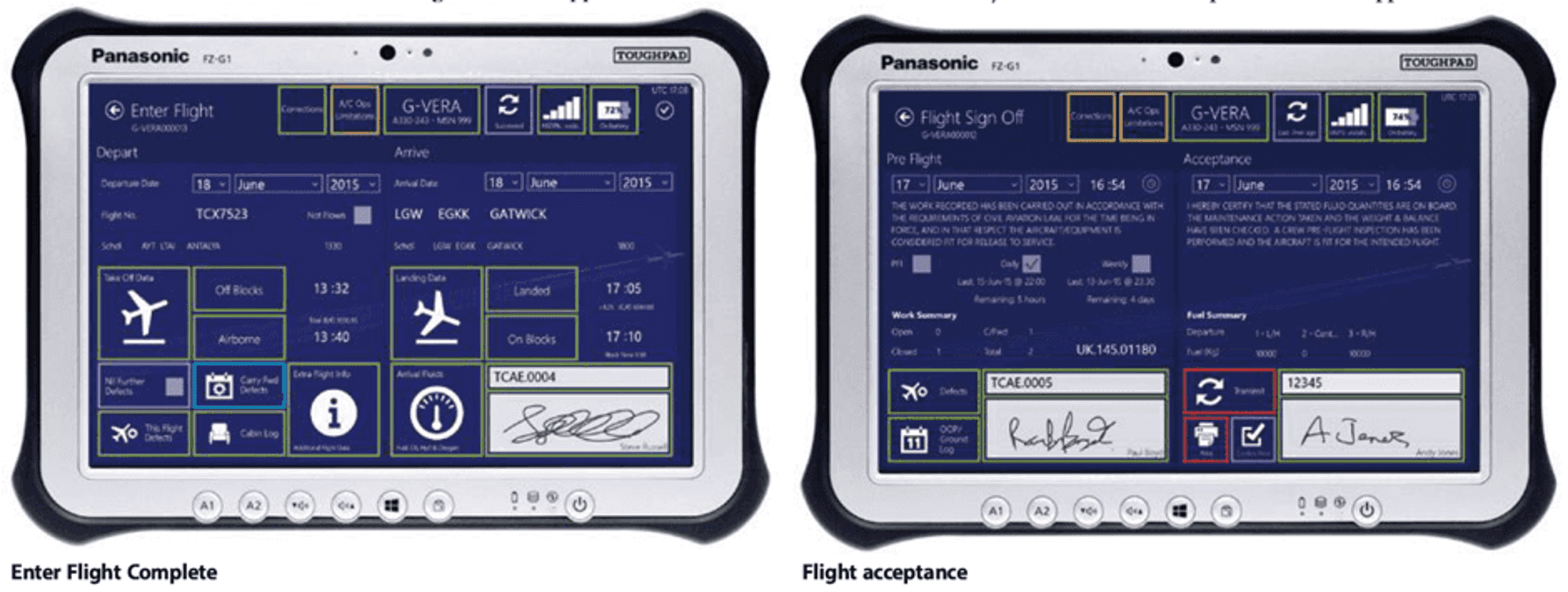
The electronic tech log used in this study is Conduce’s eTechLog8, which is a native windows 10 Touch application designed to fully function offline as an electronic tech log on a rugged tablet device. The system has been designed from scratch as an intuitive touch app that is fast and instinctive to use, completely replacing the ubiquitous legacy paper tech log systems currently in use by 99% of airlines throughout the world.
Request Conduce ETL Life Cycle Cost Analysis Spreadsheet
Contact Conduce through the website to request the Conduce ETLL life cycle cost analysis spreadsheet and type in your own figures and numbers to determine how much your airline or operation could save using an eTechLog solution.